

Presbyopia is an age-related condition where the eye gradually loses the ability to focus on close objects. It occurs as the natural lens becomes less flexible over time, typically beginning after age 40.
Presbyopia
Condition
Presbyopia
Presbyopia is an age-related condition that makes it difficult for the eyes to focus on objects that are up-close. It is a normal part of the aging process that happens to everyone.
An Overview: Presbyopia
At a Glance:
- Presbyopia is a natural condition that occurs in all humans
- It involves a loss of the eye’s ability to focus on objects up-close
- Usually starts at age 40 and keeps progressing until later in life
- Optimal treatment depends on your age
When we are young, the natural lens inside of our eye is extremely flexible, allowing us to easily focus on close objects. Over time, the lens gradually loses its flexibility, which makes focusing on close objects difficult. This condition is called Presbyopia, commonly called Near Vision, and it is a normal part of the aging process that happens to everyone, even those who have never had a vision problem before. In the early stages of Presbyopia, people will first notice difficulty reading small print, such as on a menu, a cell phone, or a newspaper. They may compensate for this by holding reading materials further away. As Presbyopia progresses, patients are unable to hold objects with small print far enough away to see them clearly. They will often complain that their arms are not long enough anymore. At this stage, most patients will require some type of near vision correction or presbyopia surgery.
Surgeons at CODET Vision Institute in Tijuana, Mexico are experts in Presbyopia Surgery and Near Vision Correction
Presbyopia Surgery
There are several effective treatments for Presbyopia, but they are highly dependent on the patient’s age.
For patients 45-55 years old:
Once you reach your 40s and start to experience Presbyopia, things start to get a little bit more complex. You may find that you need both near and distance correction. When you reach the age of 45, and you are looking for a solution to Presbyopia, laser correction may be the best option for you.
- PresbiLASIK. This is a multifocal laser treatment of the cornea that allows each eye to be able to focus on both near and far distances. Laser vision correction has a 30+ year track record of excellent performance for near vision.
For the patient who is 55+ year old:
At this stage of life, methods that worked in the past, such as contact lenses, LASIK, or a conventional lens implant that corrects your distance vision, will not work for reading up close without glasses. However, presbyopia surgery with a multifocal or trifocal lens implant can improve both near and far focus in patients over age 55, without the need for glasses.
- Refractive Lens Exchange (RLE) and IOL surgery. This procedure involves the removal of the natural lens and replacement with an intraocular lens (IOL). The IOL is held in place with the same capsule that held the eye’s own natural lens in place. Patients electing to have RLE surgery will never have to worry about developing cataracts later on in life.
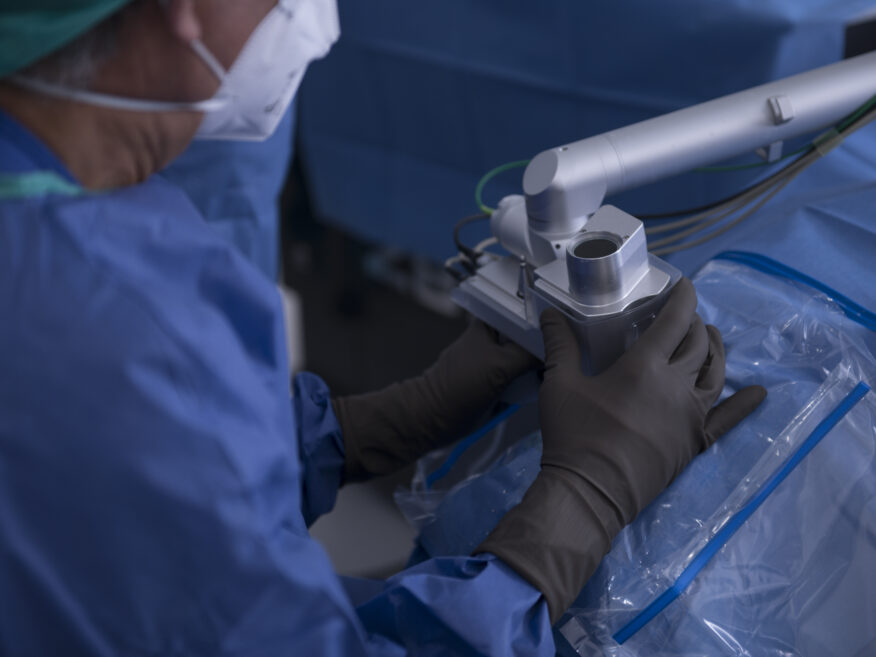
Why CODET for Presbyopia?
Global leaders for Presbyopia treatment and surgery
- 30+ years of experience using laser and IOLs for near vision correction
- Dr. Arturo Chayet is the most experienced surgeon in the world with the Light Adjustable Lens
- Best in class results for any type of Presbyopia correction
State-of-the-art technology for Presbyopia
- World-class operating rooms and equipment
- CODET has the most advanced intraocular lenses available:
- Light Adjustable Lens through Extended Depth of Focus (EDF)
- PanOptix IOL
Proven record of successful correction of Presbyopia
- We only perform surgery when the patient is the right candidate for it
- 90% of our patients see 20/20 at all three distances (near, intermediate, and distance)
- In more than 90% of cases, we achieve results within a half diopter, well above the standard benchmark for trifocals.
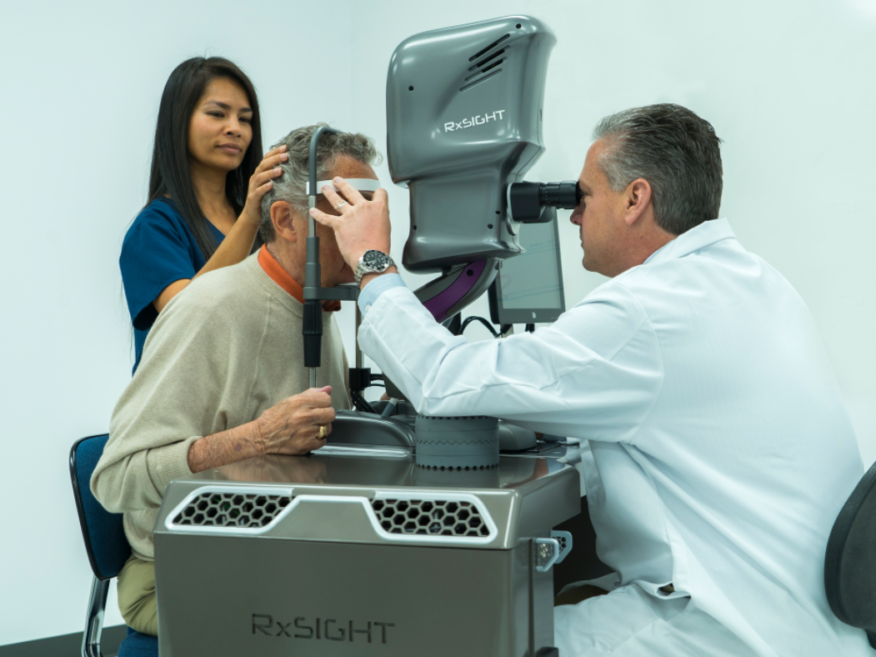
About our Technology and Facilities
CODET Vision Institute in Tijuana, Mexico, is one of the few institutions in the world with such a wide variety of the most advanced diagnostic and surgical technology for Presbyopia.
Diagnostic Equipment:
Diagnosis begins with one or more of the following pieces of equipment. All provide the most advanced examinations and measurement of the structure of the anterior segment of the eye and cornea biomechanics:
- Anterion
- Corvis
- Pentacam
Surgical Equipment:
State-of-the-art equipment ensures patient safety and surgical success. Using in conjunction with one another, these lasers make Presbyopia treatment more precise and more effective than ever:
- Femto LDV Z8
- Centurion Vision System
- WaveLight® EX500 Excimer Laser
What is Presbyopia?
A quick and easy look on presbyopia.
INSIGHTS: A PATIENT STORY
After wearing reading glasses for a long time, Moumen came all the way from San Diego to Tijuana to have his surgery done at CODET Vision Institute. Now, he can see clearly and is very happy with his results.
Everything went really smooth, I had the surgery yesterday, and I woke up this morning, and for the first time I started texting without glasses, and it was very exciting.
Chef Moumen Nouri PresbiLASIK San Diego, CA, US