


By the Numbers: Workplace Eye Safety at a Glance
From common hazards to prevention tips, discover the eye-opening numbers behind workplace eye injuries

Each year, the American Academy of Ophthalmology (AAO) dedicates the month of March to raising awareness about workplace eye health. It’s a reminder that our eyes face real risks on the job — and that the vast majority of those risks are entirely preventable. At CODET, we stand behind this initiative and want to share the facts, the numbers, and the simple steps that can protect your most precious sense.
The Scope of Workplace Eye Injuries
The numbers are sobering. According to the according to reports by the Bureau of Labor Statistics and the National Institute for Occupational Safety and Health, approximately 2,000 U.S. workers sustain job-related eye injuries that require medical treatment every single day. That translates to roughly 730,000 workers per year whose eyes are harmed while doing their jobs.
The most striking part? The AAO estimates that the overwhelming majority of these injuries could have been avoided simply by wearing appropriate eye protection. This is not a story about freak accidents — it’s a story about prevention.
What Causes Workplace Eye Injuries?
Eye injuries on the job come from a variety of sources. Understanding the most common causes is the first step toward avoiding them. The four primary hazards are:
- Flying or Falling Objects: Debris, dust, and objects launched by machinery or wind can strike the eye with enough force to cause serious damage.
- Tools & Equipment: Power tools, hand tools, and heavy machinery can eject particles or make direct contact with the eyes.
- Chemical Exposure: Splashes from acids, solvents, or cleaning products can cause chemical burns, some of which result in permanent vision loss.
- Particles & Sparks: Welding, grinding, and cutting produce hot sparks and metallic particles that can embed in or burn the eye’s surface.
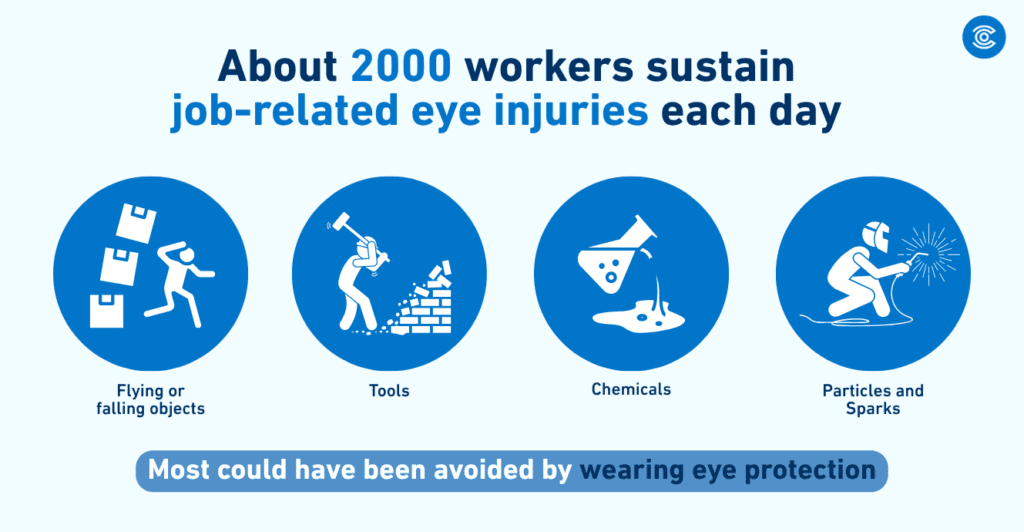
For all four categories, certified safety eyewear — whether safety glasses, goggles, face shields, or welding helmets — provides a highly effective barrier. Most injuries happen when workers are either not wearing protection or using the wrong type for the hazard present.
Eye Injuries by Industry: Where the Risk Is Highest
Not all workplaces carry the same level of risk. Data from the U.S. Bureau of Labor Statistics (2019) reveals that 34% of all nonfatal workplace eye injuries occur in just two sectors: manufacturing and construction. Here’s how the numbers break down across all major industries:
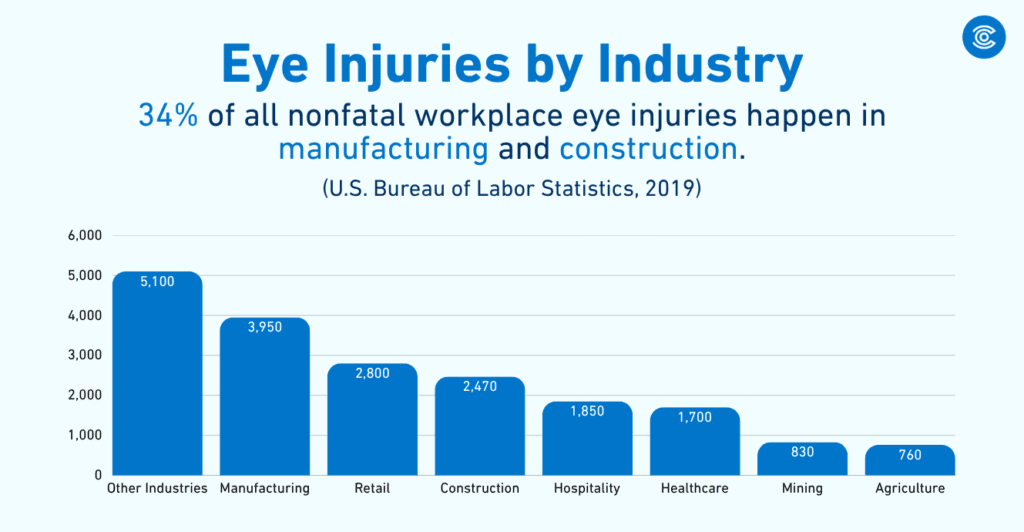
While the bar chart highlights the blue-collar industries you might expect, it’s worth noting that retail workers (2,800 injuries) and healthcare professionals (1,700 injuries) also face significant risks — from falls, chemical exposure, and bloodborne pathogen splashes — that are easy to overlook.
Digital Eye Strain: The Modern Workplace Hazard
Beyond physical injuries, today’s workplace has introduced a widespread but often underestimated threat: digital eye strain. With most office professionals spending 7+ hours per day in front of screens, symptoms like dryness, blurry vision, headaches, and neck pain have become commonplace.
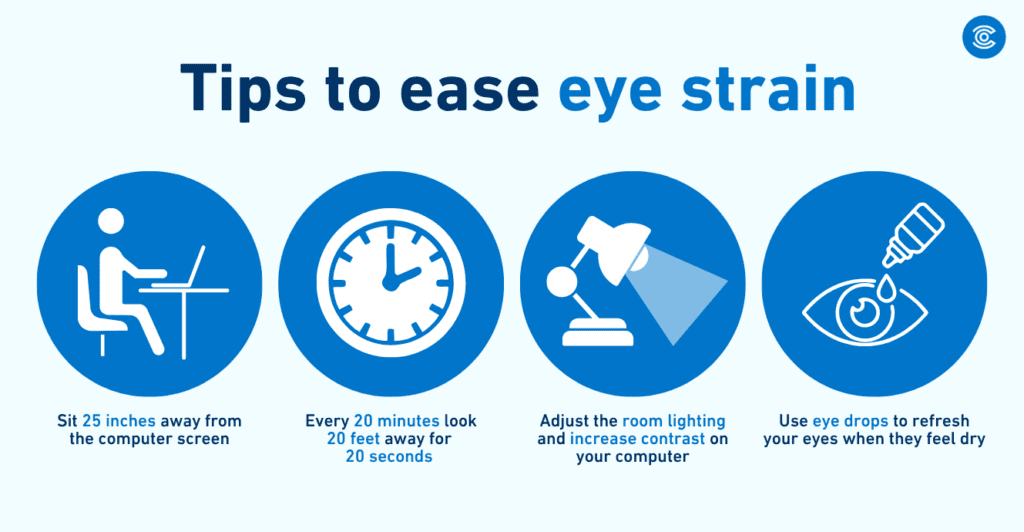
The good news is that managing digital eye strain is straightforward with the right habits:
- Optimal Screen Distance: Position yourself 25 inches (about arm’s length) away from your computer screen to reduce focusing strain on your eye muscles.
- The 20-20-20 Rule: Every 20 minutes, look at something 20 feet away for at least 20 seconds. This allows your eye muscles to relax and reset.
- Adjust Lighting & Contrast: Reduce ambient glare on your screen, and increase the contrast settings on your display so your eyes don’t have to work as hard to distinguish text.
- Use Lubricating Eye Drops: Screen use dramatically reduces blink rate, leading to dry eyes. Artificial tear drops help replenish moisture and refresh tired eyes throughout the day.
How to Prevent Workplace Eye Injuries: A Practical Guide
Whether you work on a construction site or in an office, protecting your eyes starts with awareness. Here are the core prevention principles recommended by the AAO and occupational safety experts:
- Always assess the hazards before starting a task. Ask yourself: are there flying particles? Chemicals? Each hazard requires a specific type of eye protection — don’t assume that standard safety glasses cover all scenarios.
- Wear the right protection for the right job. Safety glasses with side shields are appropriate for most tasks, but chemical handling may require chemical splash goggles, while welding demands a face shield or auto-darkening welding helmet.
- Never remove eye protection mid-task. Many injuries happen in the brief moments between when workers remove their glasses and when hazards occur. Keep protection on until you have fully left the hazard zone.
- Schedule regular eye exams. Many vision problems develop gradually and are not noticed until they significantly impact work performance and safety. A comprehensive dilated eye exam can detect conditions early, when they are most treatable.
Source: American Academy of Ophthalmology | Workplace Eye Wellness: Printable Infographics